
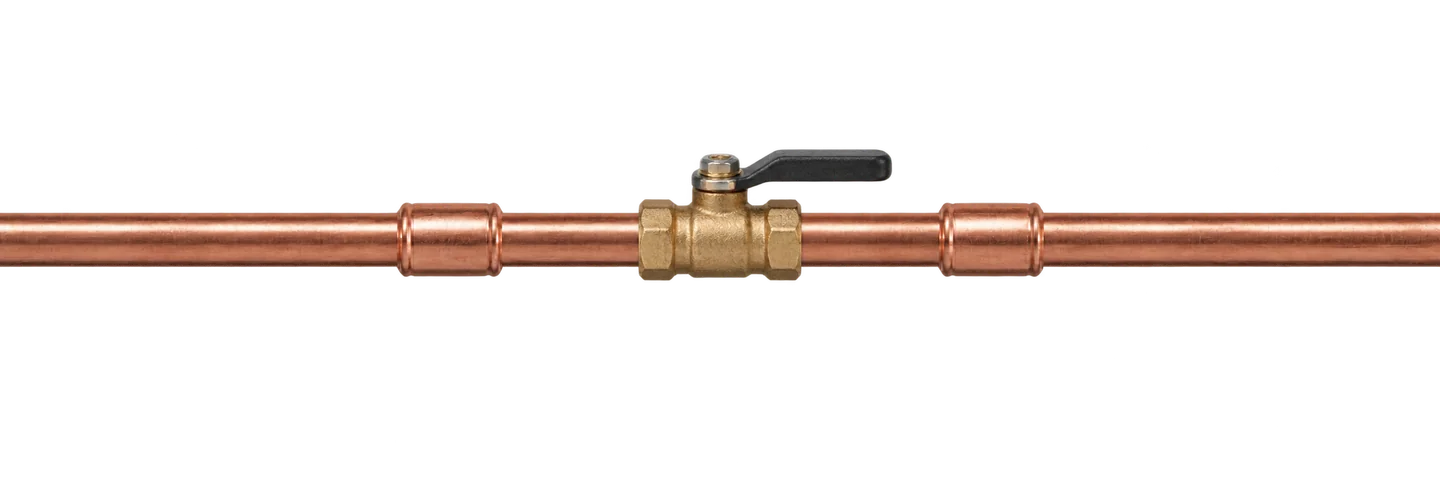
Untreated water enters
Incoming water may carry sediment and has chemistry unique to the home’s supply and plumbing.
G.I. BRUNO SERVICE & REPAIR · WHOLE-HOUSE FILTRATION INSTALLATION
Take control where water enters your home. Match filtration to the water reaching your taps—and the plumbing you rely on every day.
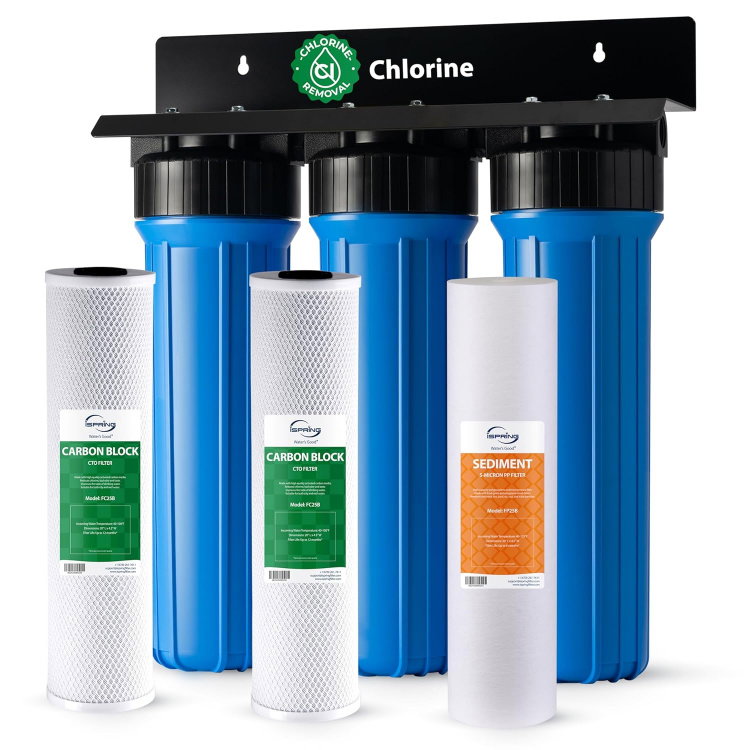

Water travels from the treatment plant through distribution pipes before reaching your home. Pipe corrosion, repairs and changes in flow can disturb accumulated sediment.
The illustrated setup uses sediment, carbon-particle and carbon-block filters: particles first, chlorine taste and odor next.
Filter performance depends on the selected system. Specific contaminant reduction requires appropriate certification. Illustrative equipment, not an installation diagram.
FROM WATER CONDITIONS TO WATER DAMAGE
Sediment, water chemistry, temperature, flow, and the condition of the copper can all influence corrosion. Hot-water lines can be especially vulnerable because heat may accelerate some corrosion processes.
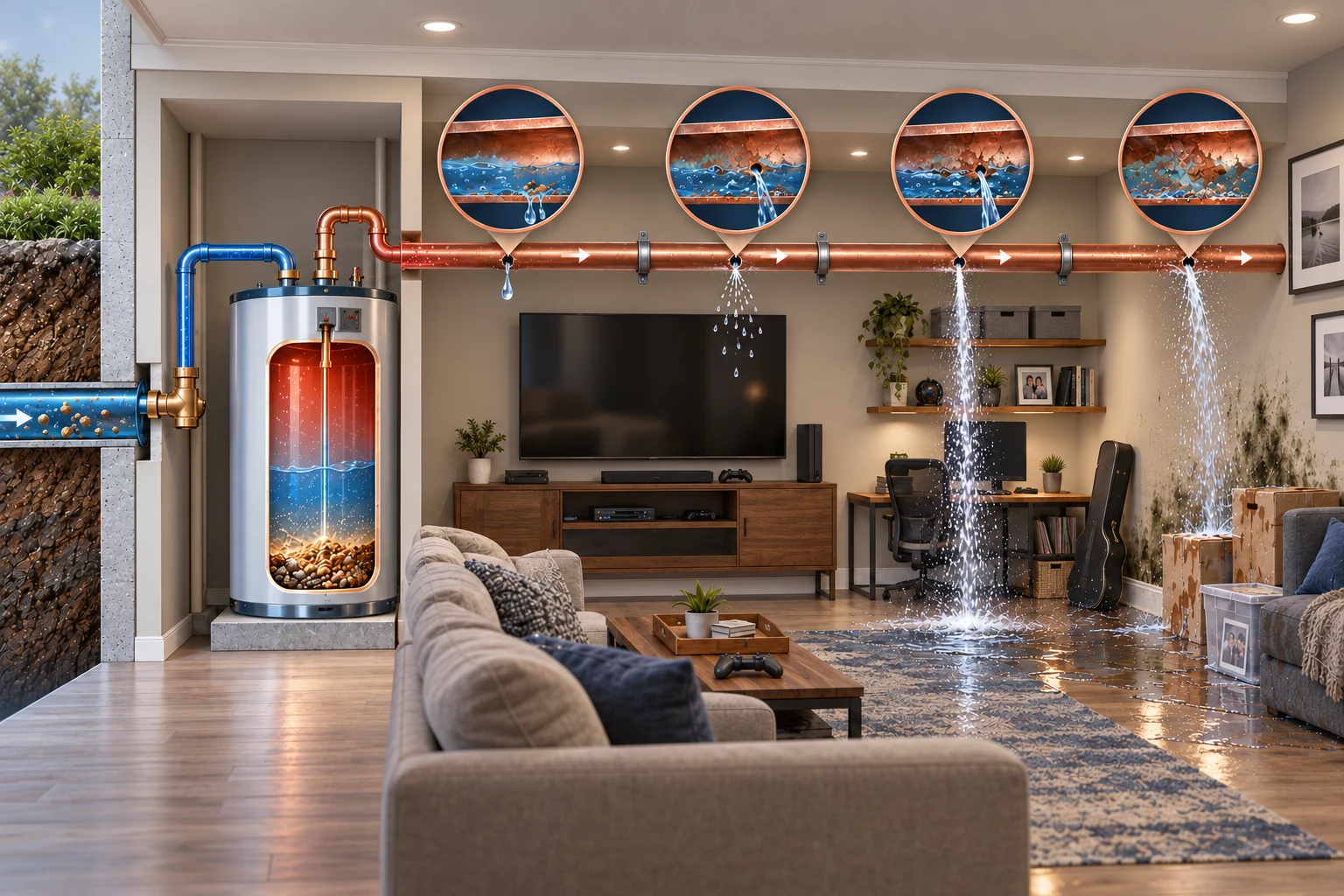
Incoming water may carry sediment and has chemistry unique to the home’s supply and plumbing.
Sediment can collect in a tank water heater and deposits may form along low points inside horizontal piping.
Under the wrong conditions, a small pit can progress through the copper wall and become a pinhole.
A hidden drip can become a spray or jet, soaking finishes and belongings and creating conditions where mold may grow.
Filtration may address selected water-quality concerns, but it is not a universal cure for copper corrosion. Testing, pressure checks, water temperature, pipe condition, and the correct treatment strategy all matter.
THE WATER DOESN’T STOP AT THE MAIN PIPE
The same water continues through narrow tubing, screens, cartridges, seals, valves, and appliance controls. Deposits and debris can restrict flow, interfere with moving parts, and contribute to wear or leakage throughout the home.
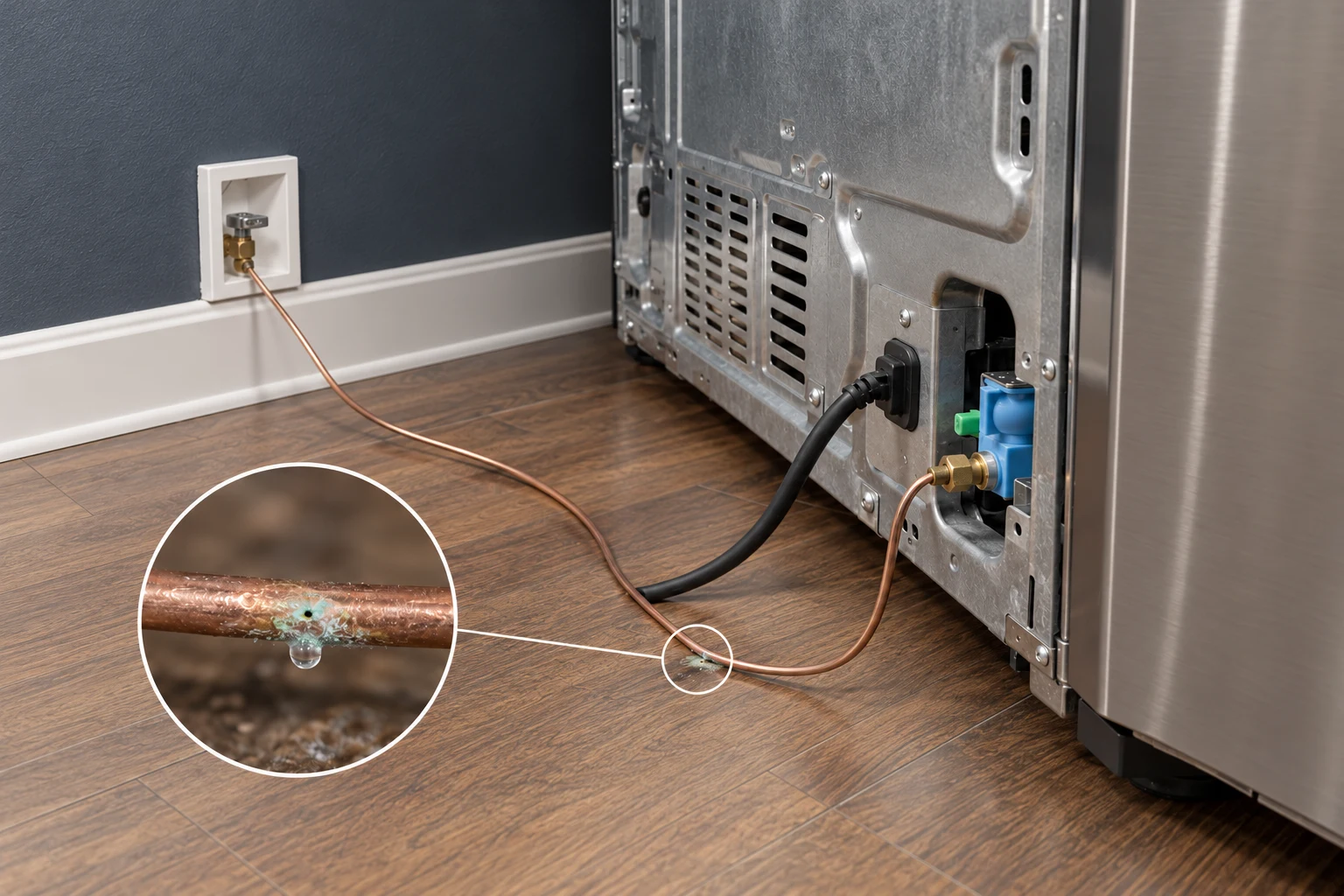
Small ¼-inch copper tubing can develop deposits, connection leaks, or localized corrosion behind and beneath the appliance.
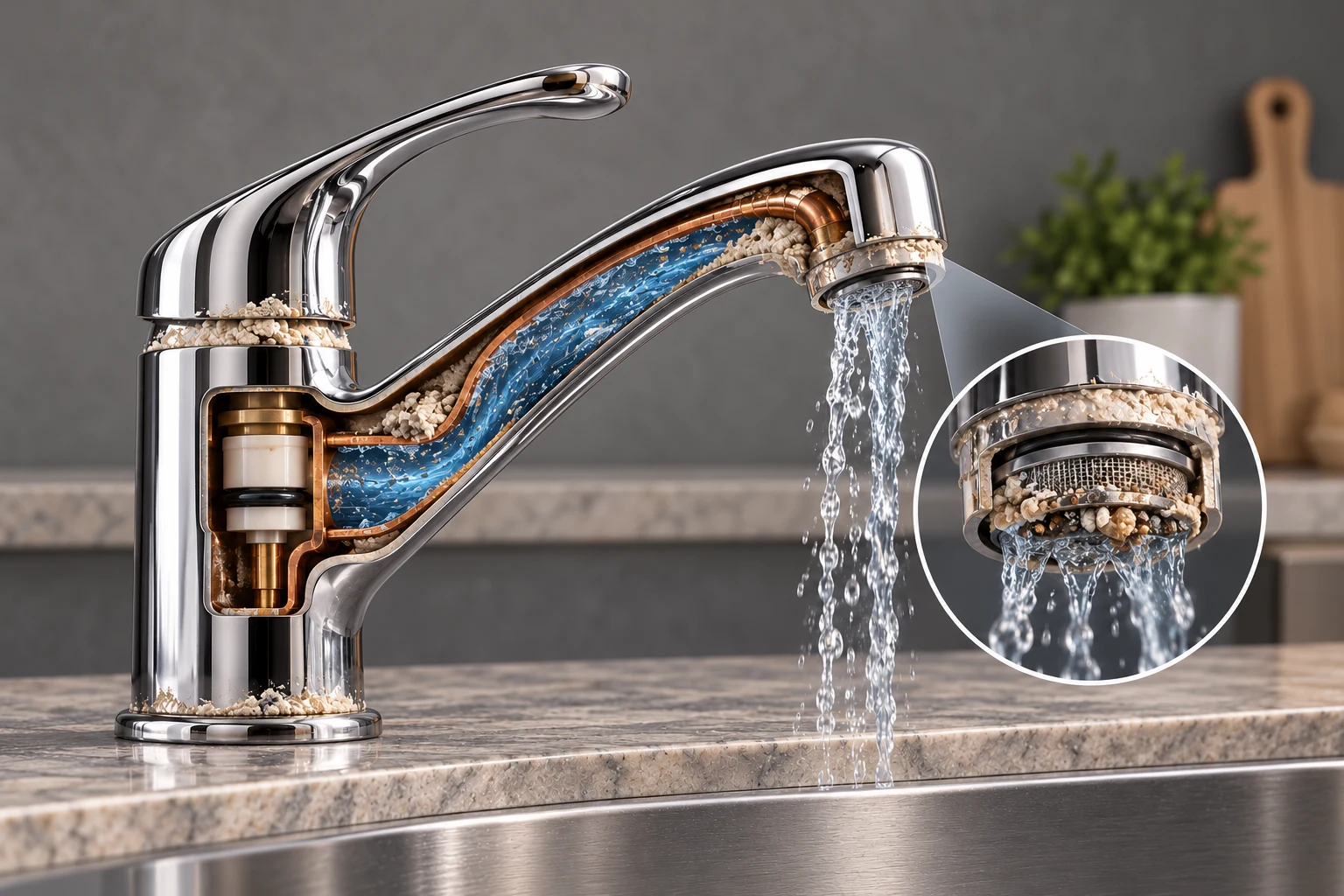
Scale and debris can collect at cartridges, handle openings, spouts, and aerator screens—restricting or distorting flow.
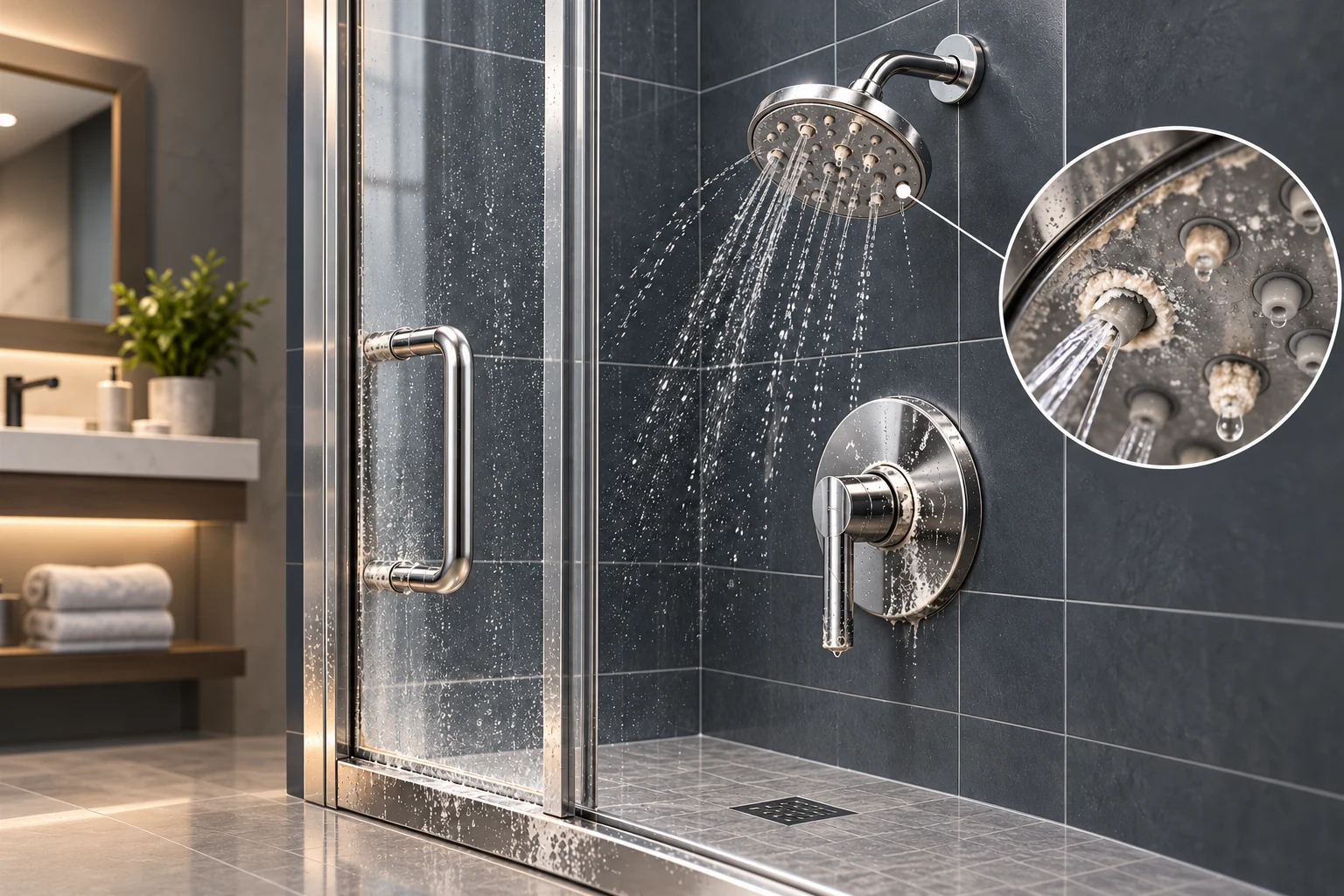
Mineral deposits can build around trim, frames, handles, and spray nozzles, leaving weak or uneven water patterns.
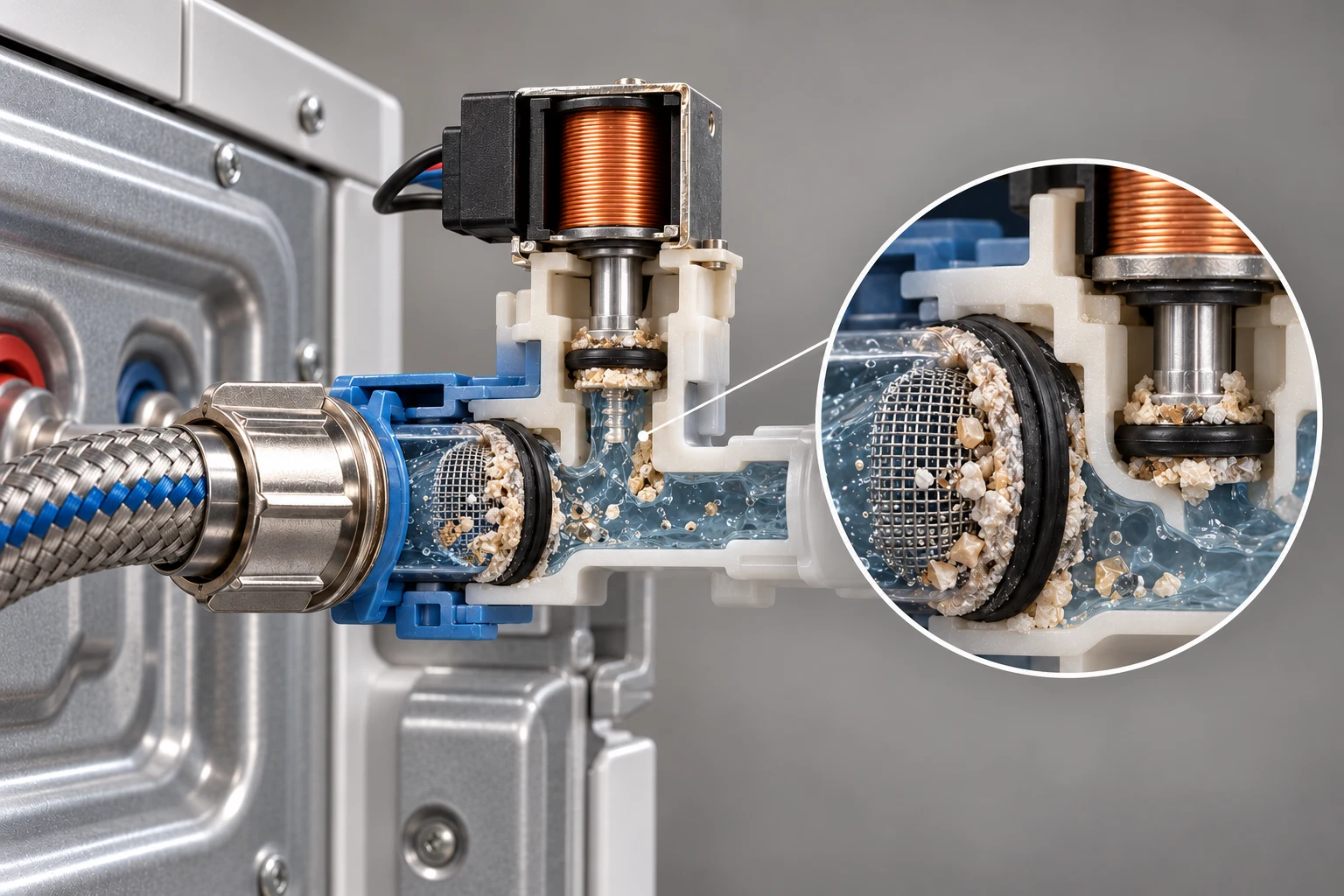
Fine debris and scale can restrict inlet screens and interfere with the solenoid valve’s small passages and seals.
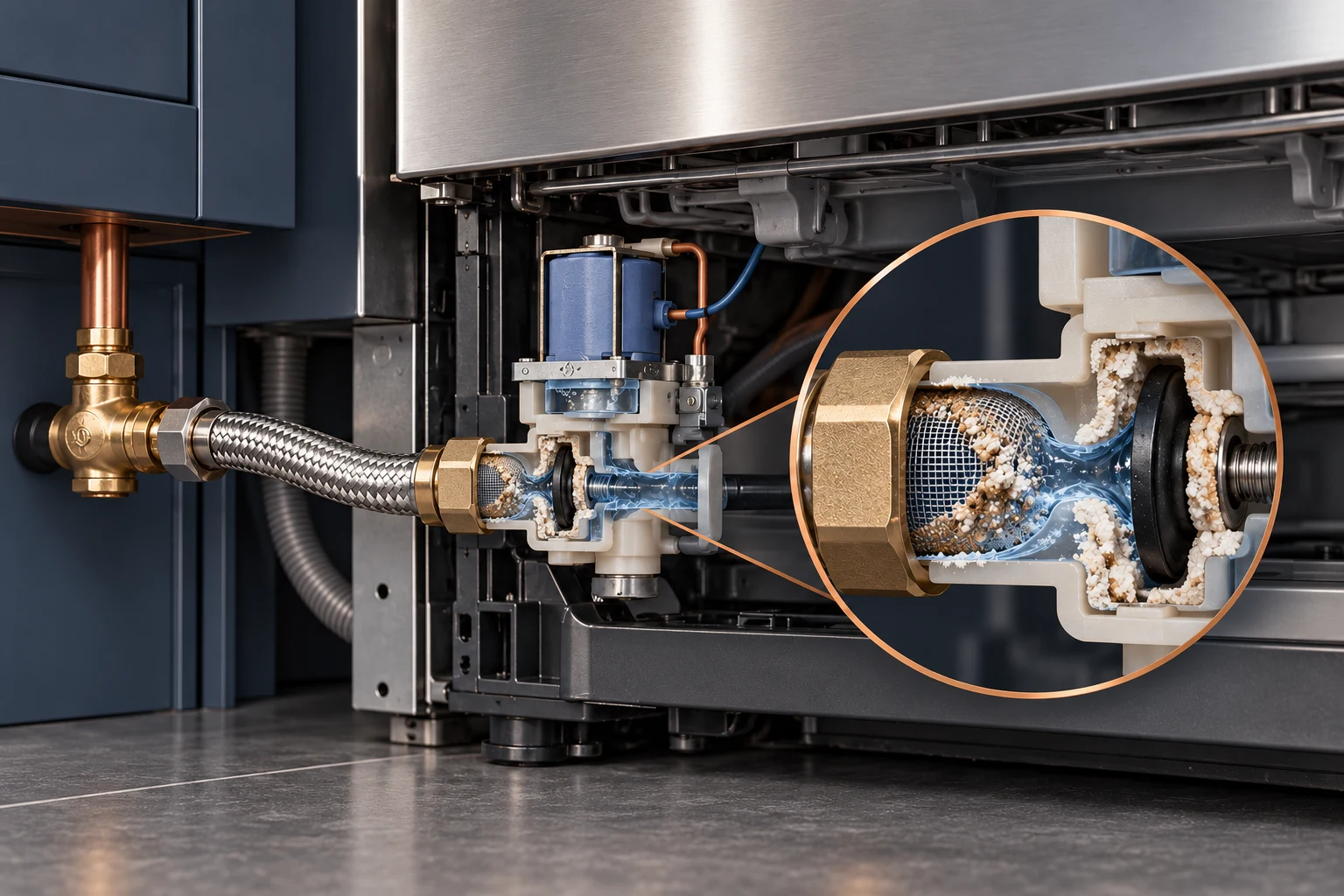
The dishwasher’s continuously connected supply relies on a small inlet screen, valve seat, and seals that can foul or wear.
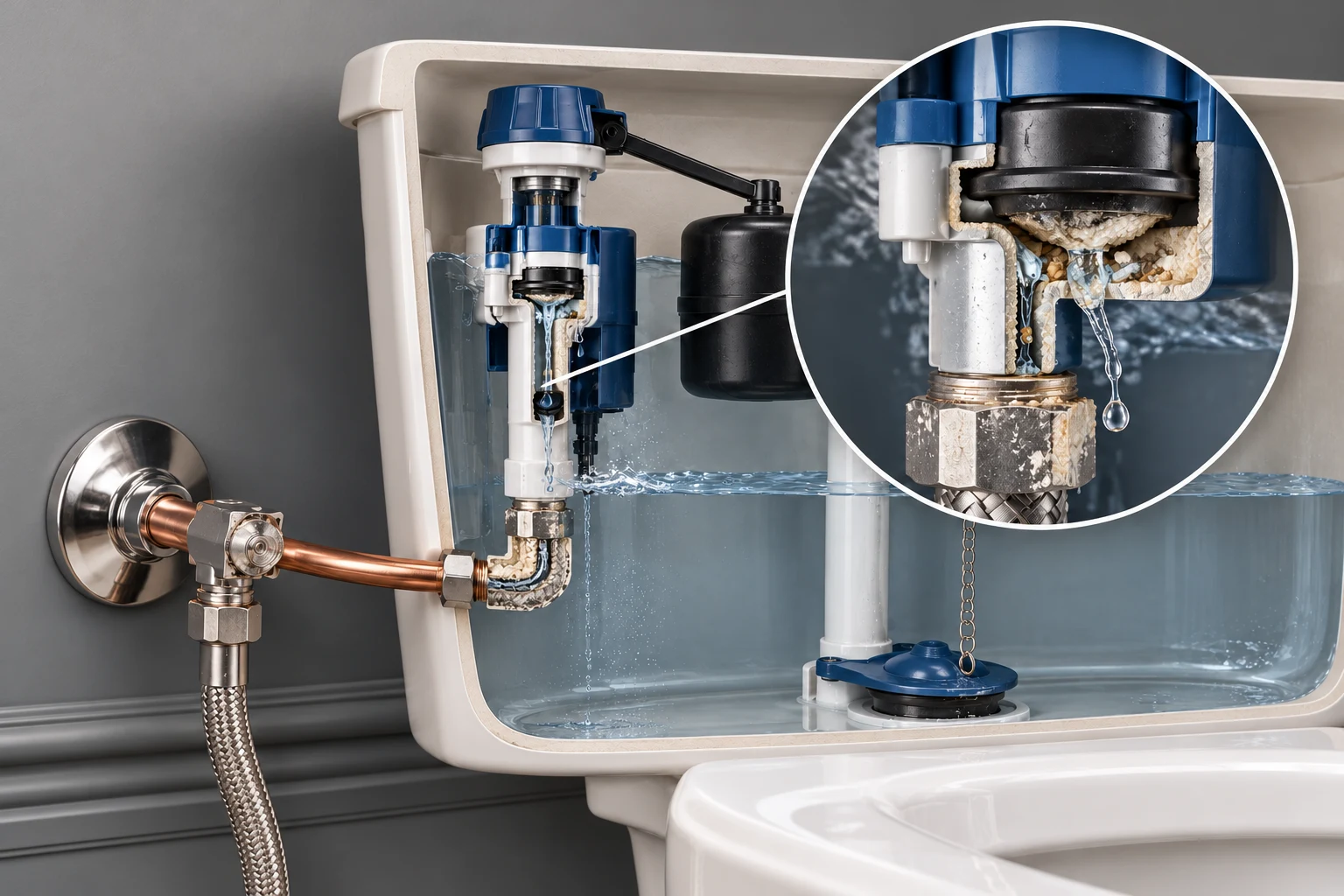
Sediment and scale can affect small fill-valve passages and diaphragms, contributing to slow fills, noise, or seepage.
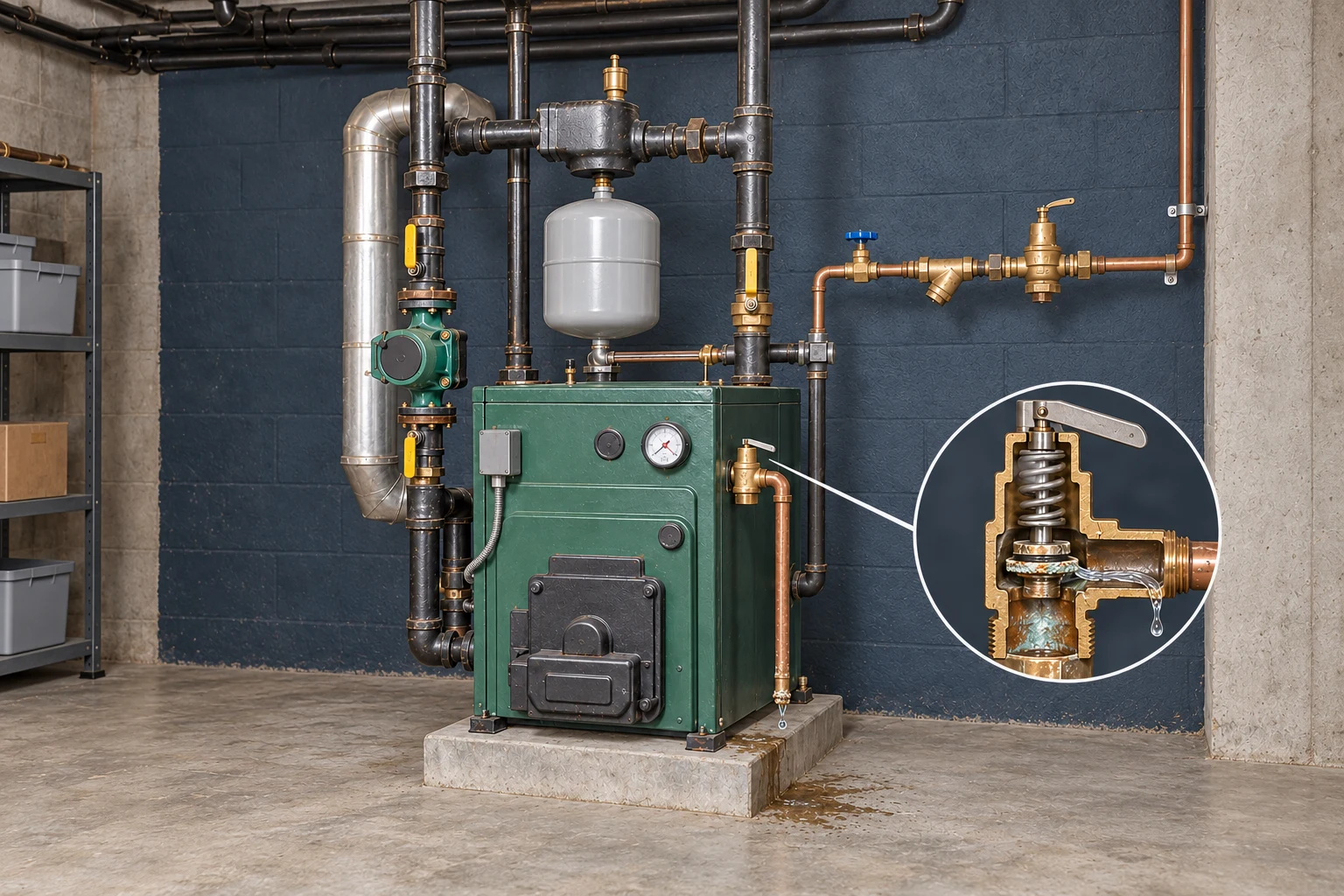
Feeders, check valves, air vents, threaded fittings, and relief valves can scale or corrode. The cutaway shows debris holding the relief-valve seat open.
These original illustrations show typical residential components, not a manufacturer’s installation diagram. Different water problems require different treatment. Sediment and carbon filtration do not automatically soften hard water or correct corrosive water chemistry; testing helps identify the right approach.
TREATMENT IS THE START OF THE JOURNEY
Water travels through a distribution network before reaching your tap. Pipe corrosion, repairs, and changes in flow can disturb accumulated sediment. Start with your water report and what you’re seeing at home.
THREE STAGES. CLEAR PURPOSES.
Captures suspended particles before they travel farther into your plumbing.
Capture depends on the cartridge’s micron rating.Rated carbon media reduces chlorine taste and odor. The right media and contact time matter.
Performance depends on the cartridge and water flow.Additional carbon or a specialty cartridge completes the setup for your water report and treatment goals.
We confirm the selected model’s rated performance.Health-related concerns such as lead require a system certified for that specific reduction. Standard sediment and carbon filters do not automatically soften or disinfect water. Choosing a water filter · EPA ↗
THREE THINGS WORTH CHECKING NOW
Give your fixtures, appliances, and plumbing the conditions they’re designed to work with.
Whole-house filtration targets particles and other concerns the selected cartridges are rated to reduce.
Price your filtration ↗A thermostatic mixing valve blends hot and cold water to regulate delivered temperature.
Explore mixing valves ↗A pressure-reducing valve controls incoming pressure to help limit stress on plumbing components.
Explore pressure control ↗Don’t wait for wear to become a repair. Check it. Control it. Maintain it.
INSTALL IT. KEEP IT WORKING.
G.I. Bruno Service & Repair handles the plumbing side of your filtration system, from the agreed installation to ongoing cartridge changes and repairs.
Check the incoming line, space, shutoffs, and filter-change access.
Fit compatible cartridges. Set a service schedule for your water use and system.
Find the cause of leaks, pressure loss, and valve problems.
LET’S GET TO IT.
Send your town, a photo of the incoming water line or existing filters, and what you want to improve. If you have a water report or test results, include them.
service@gibrunoservice.com ↗WHOLE-HOUSE FILTRATION INSTALLATION
Discuss these additions when planning your installation. Optional equipment and water testing are quoted separately from the standard filtration installation. Final equipment, scope, and price are confirmed for your home.
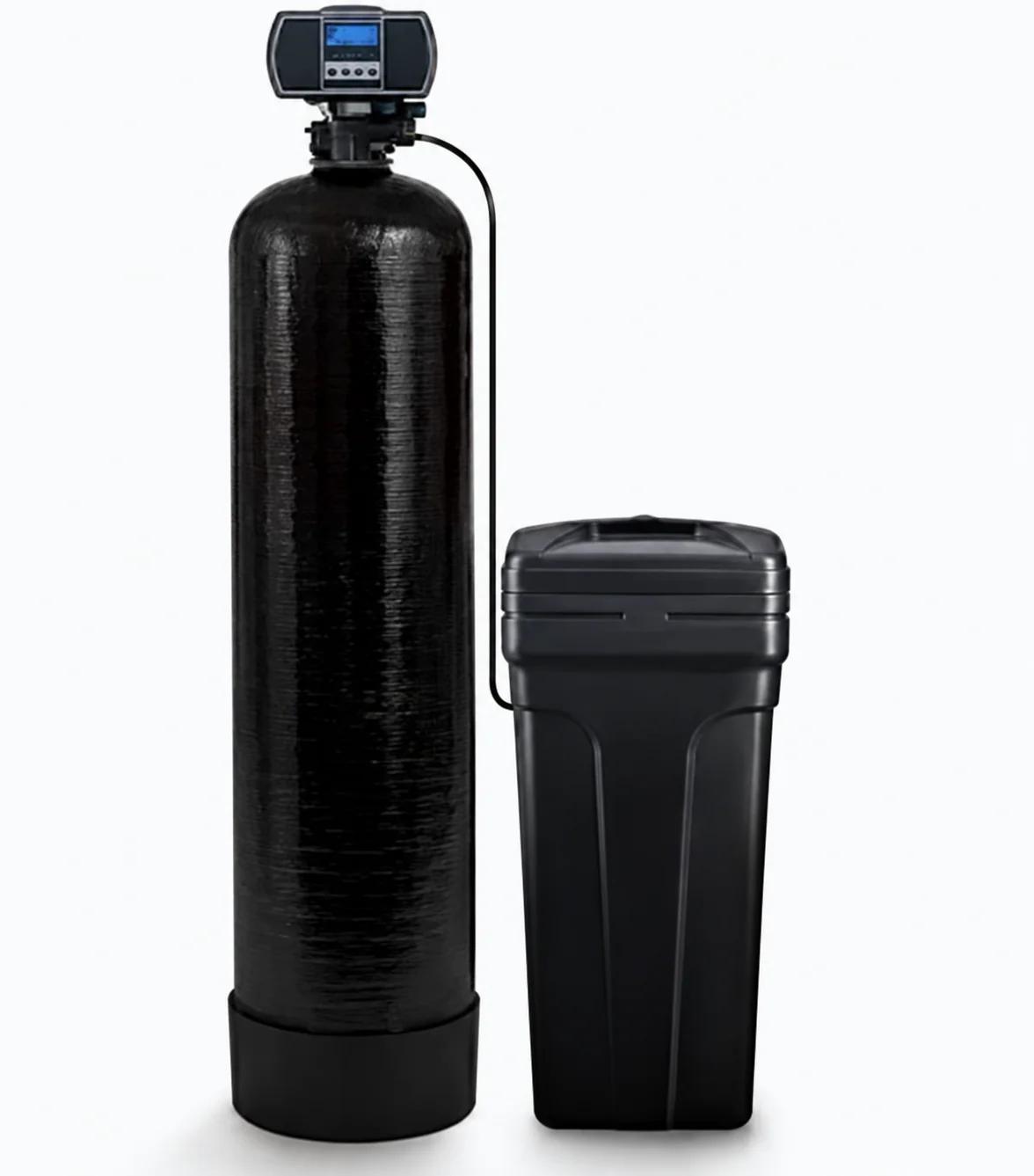
Discuss hardness concerns and whether a softener makes sense for the home.
Equipment example. Final model and setup depend on your home.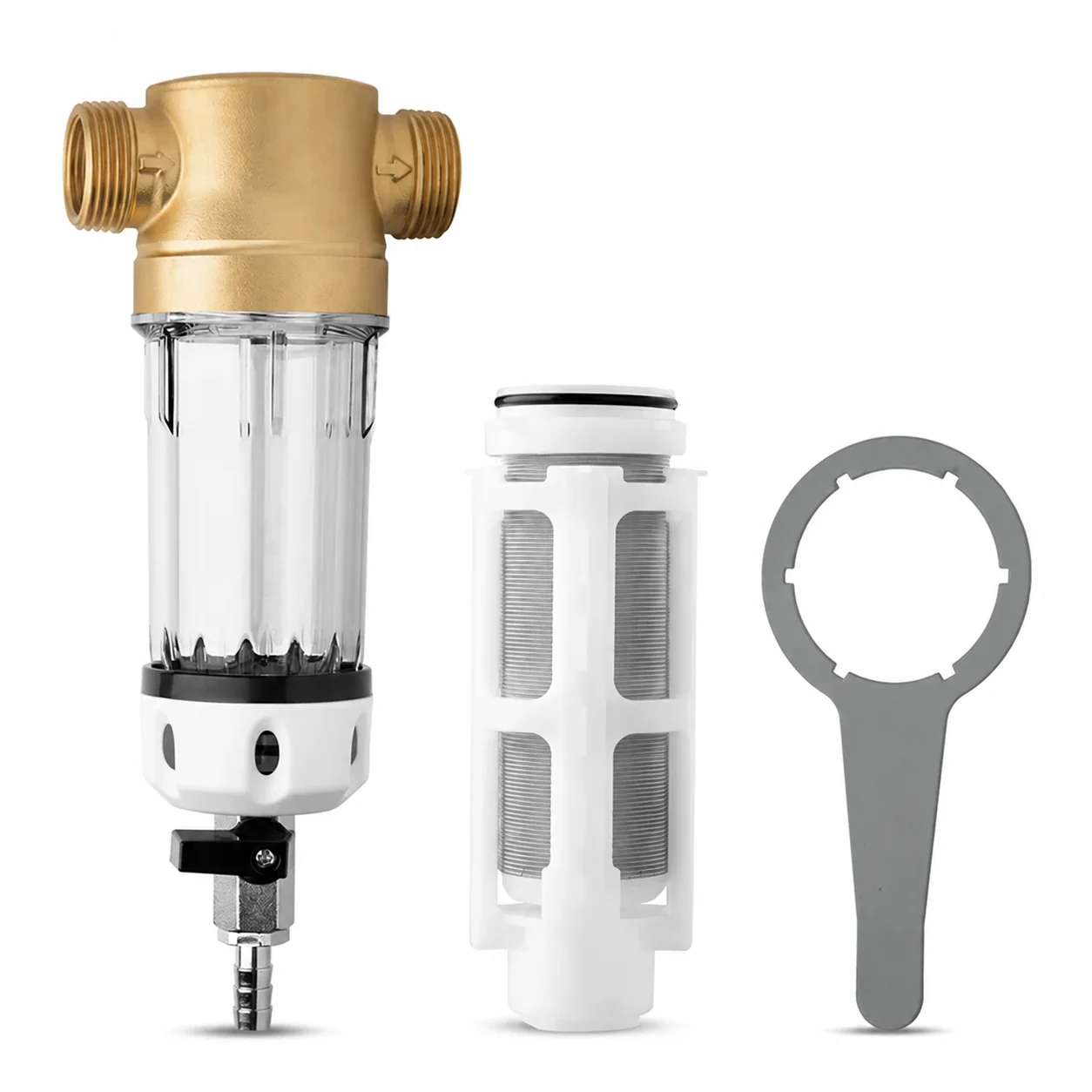
Review sediment and screen-filter choices before selecting a setup.
Equipment example. Final model and setup depend on your home.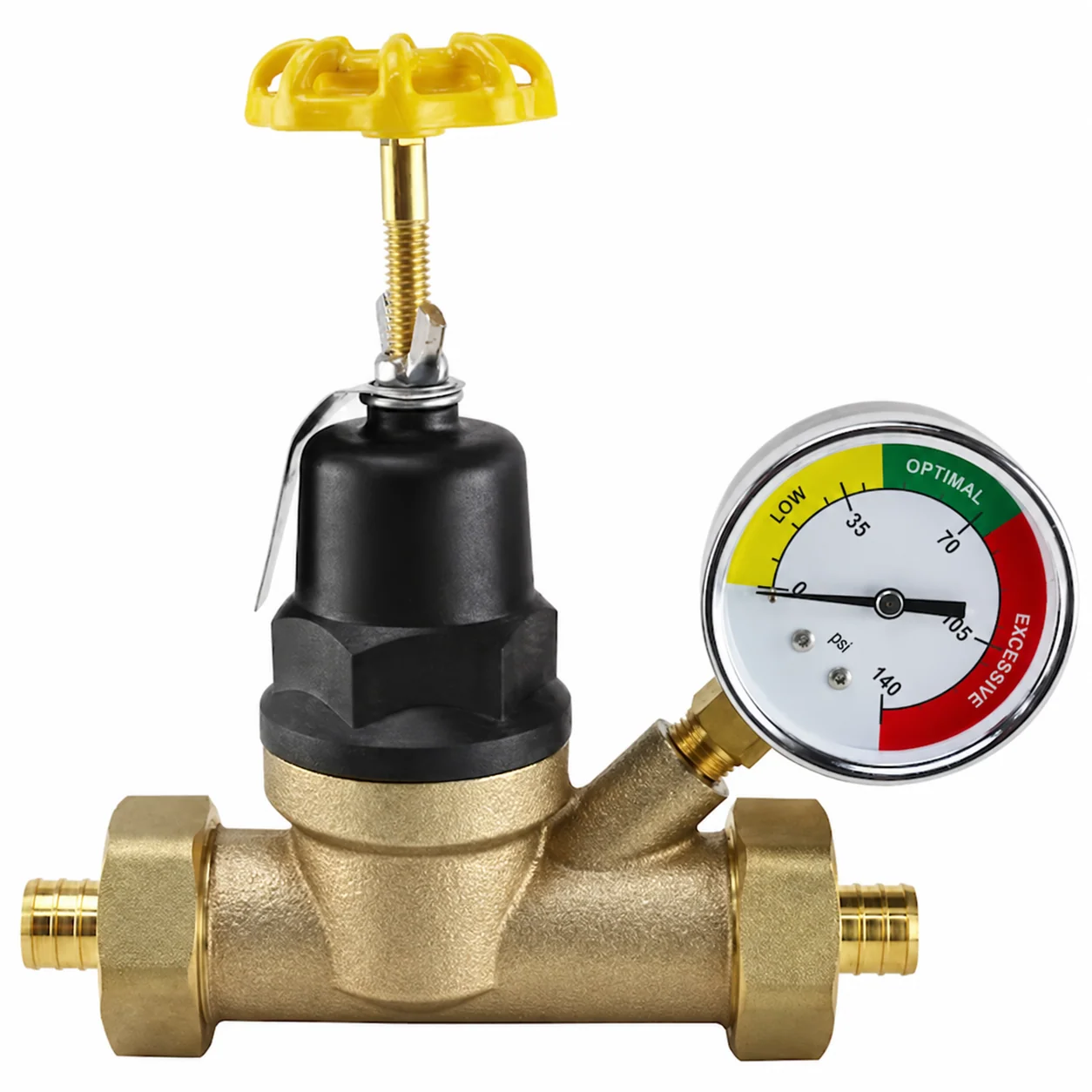
Check pressure conditions and discuss whether a valve is appropriate.
Equipment example. Final model and setup depend on your home.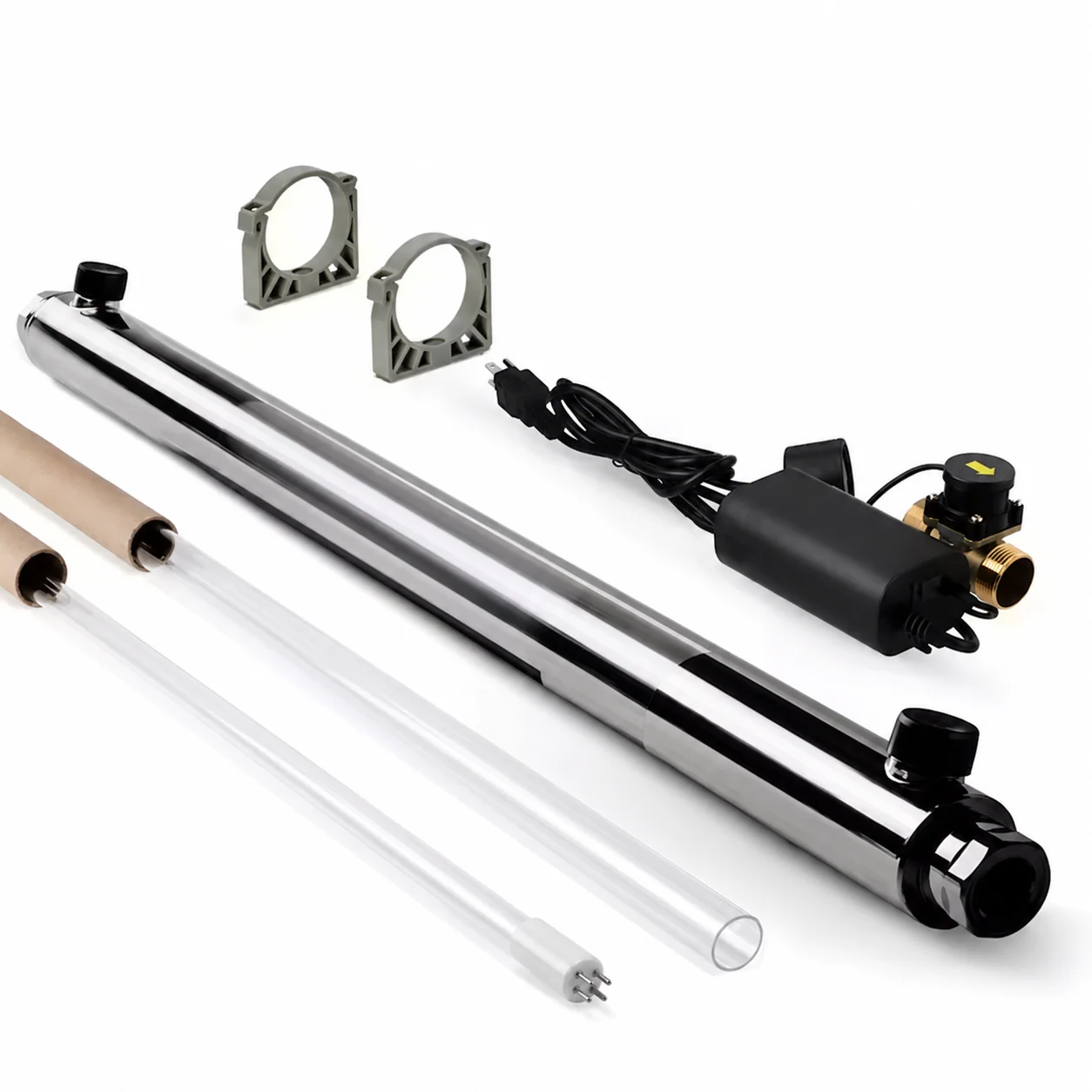
Ask whether UV treatment belongs in a system designed for your water.
Equipment example. Final model and setup depend on your home.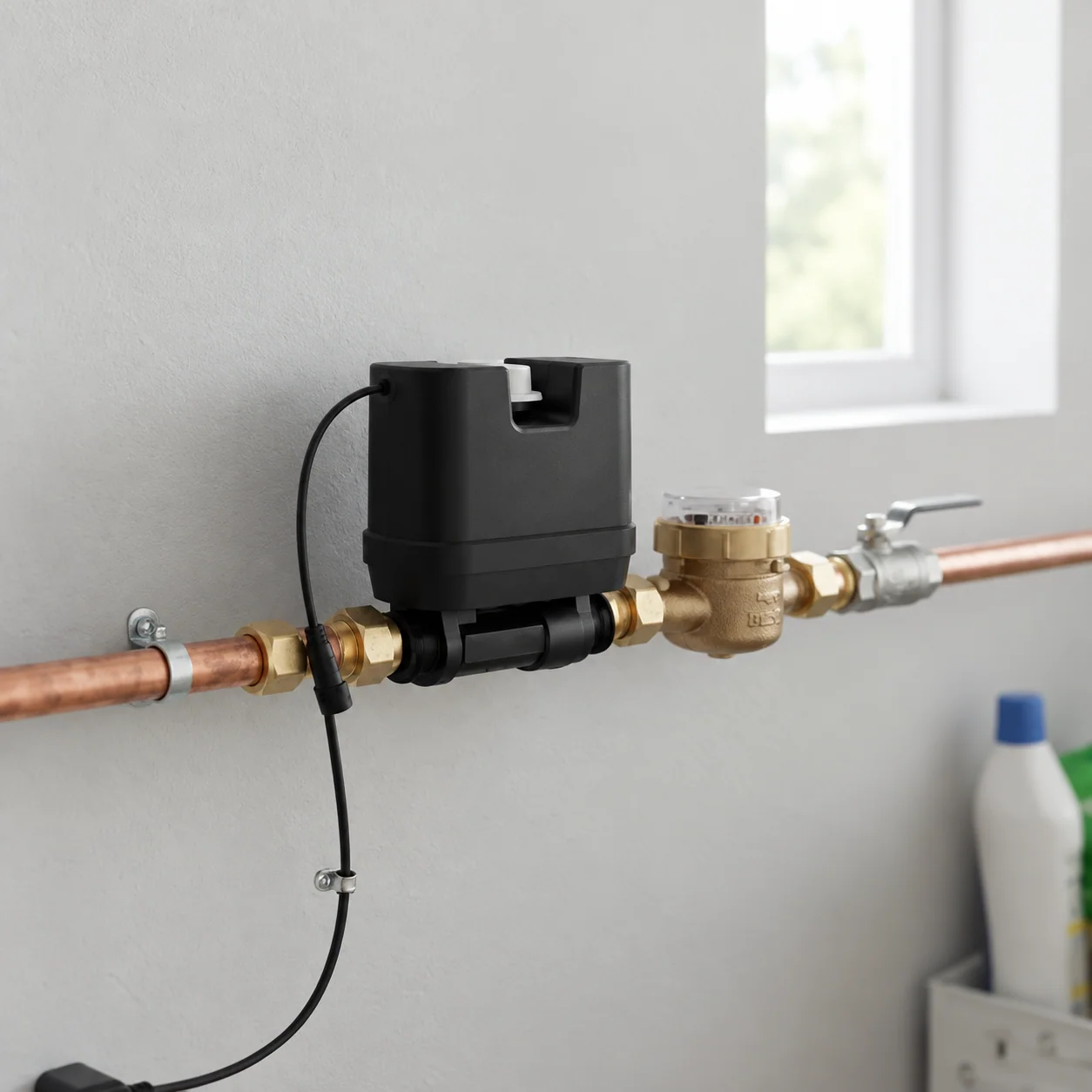
Explore automatic water shutoff options suited to your plumbing and monitoring needs.
Equipment example. Final model and setup depend on your home.
Optional water testing is available for an additional charge before you purchase a filtration system. We review the results with you to help choose a setup for your home.
Equipment example. Final model and setup depend on your home.BEFORE YOU CHOOSE
Standard sediment and carbon filtration does not remove dissolved hardness like a water softener. Tell us if scale is your main concern so the system can be chosen accordingly.
It depends on the cartridge, water quality, and household usage. We’ll explain the manufacturer’s replacement interval and the signs that service is due.
Send a photo of the housings and model label. We’ll check compatibility, the issue you’re seeing, and the work required before quoting.